
How Decryption Works: Keys, Ciphers, and Why the Key Is Everything
2026-11-27 · 7 min read
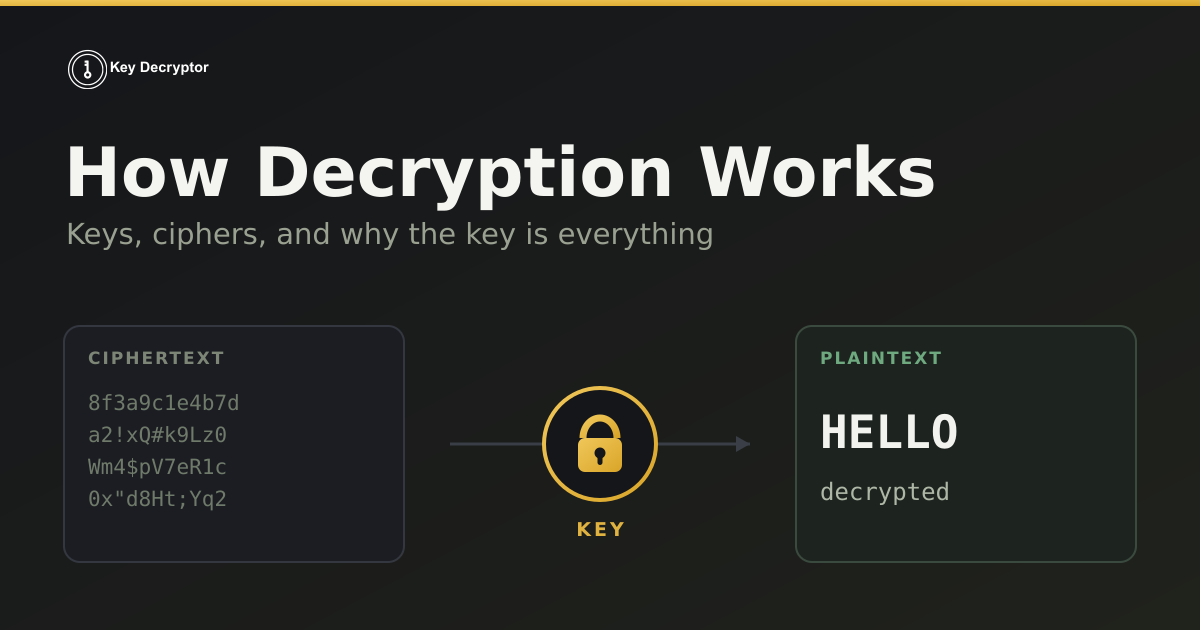
Figure 1: Ciphertext plus the right key returns the original plaintext
Decryption is not magic, it is the key doing its job
Decryption looks mysterious from the outside: scrambled bytes go in, readable text comes out. The secret is simpler than it seems. Decryption is just encryption run in reverse, and the thing that makes it possible is the key. Without the right key, even a perfect tool has nothing to work with. Here is what actually happens, from the key to the cipher to the small details that trip people up.
Encryption and decryption, in one picture
Encryption takes readable data, the plaintext, and a key, runs them through an algorithm called a cipher, and produces scrambled output, the ciphertext. Decryption makes the same trip backward: it takes the ciphertext and the key, runs the cipher in reverse, and returns the original plaintext.
The cipher itself is public. Everyone knows how AES works. The only secret is the key, and that is deliberate. A strong cipher stays safe even when an attacker knows every detail of the algorithm, as long as the key stays private.
The key is the whole point
A key is just a number, usually a long random one. Its length is measured in bits: a 128-bit key is a 128-digit binary number, and a 256-bit key is twice as long. That length is what makes guessing hopeless, because the pool of possible keys doubles with every bit added.
Here is the part that surprises people. The key is the only thing standing between ciphertext and plaintext. Lose it and the data is gone, even to the person who encrypted it. Hold it and decryption is instant. For a sound cipher there is no clever shortcut in between, which is exactly the point.
Symmetric and asymmetric: one key or two
Ciphers split into two families by how they handle keys.
Symmetric encryption uses the same key to lock and unlock. AES is the standard here, fast and used everywhere from disk encryption to HTTPS. The catch is sharing: both sides need that one secret key, and getting it to the other side safely is its own problem.
Asymmetric encryption uses a pair, a public key that anyone can encrypt with and a private key that only the owner holds to decrypt. RSA is the classic example. This solves the sharing problem, since you can hand out the public key freely, but it runs far slower, so in practice it is used to exchange a symmetric key that then does the heavy lifting.
A cipher needs more than a key
This is where real decryption trips people up. For modern symmetric ciphers, the key alone is not enough. To decrypt correctly you usually also need:
- The exact algorithm and key size, such as AES-256, not just "AES".
- The mode of operation, such as CBC or GCM, which decides how the blocks are chained together.
- The initialization vector, or IV, a non-secret random value that makes the same plaintext encrypt differently each time.
- The right padding, which fills the final block out to a full size.
Get any of these wrong and decryption either fails or returns garbage, even with the correct key. That is why a decryption tool asks for more than a password: it needs the full recipe, not just the secret.
A worked example, scaled down
The simplest cipher shows the idea cleanly. A Caesar cipher shifts each letter by a fixed amount, and that shift is the key. With a key of 3:
plaintext:   HELLO
encrypt +3:  KHOOR
decrypt -3:  HELLO
Encrypting shifts forward, decrypting shifts back by the same key. The Caesar tool does both directions. The XOR cipher is just as tidy: apply the key once to scramble, apply the same key again to restore, as our XOR cipher guide walks through. Real ciphers like AES do something far more thorough, but the shape is identical: the key drives a reversible transformation.
Decryption and cracking are not the same
People often say "decrypt" when they mean "crack", and the two are worlds apart.
- Decryption is what you do with the key. It is fast, exact, and intended.
- Cracking is what you do without the key: guessing candidates until one works, or exploiting a weakness in a broken cipher. It is slow, uncertain, and against a strong cipher with a long key, infeasible.
A tool that "decrypts" a stored application password is really applying a key the vendor built into the software, a known key rather than a guessed one. A tool that recovers a forgotten archive password is cracking, testing guesses one after another. Knowing which job you are doing tells you whether the key is already in hand or whether you are hunting for it. Our hash identifier helps with the first step of that hunt: knowing what you are even looking at.
Where hashing is different
One confusion deserves its own line: hashing is not encryption, and it has no decryption. A hash is a one-way fingerprint, with no key that turns it back into the input. You cannot decrypt a SHA-256 hash or a bcrypt value, only test guesses against it. We cover the full split in hashing vs encryption vs encoding. If someone offers to "decrypt your hash", they mean crack it, and only for weak, unsalted ones.
Try it in the browser
The quickest way to build intuition is to watch a key work:
- Encrypt and decrypt text with AES, then change one character of the key and see the output change completely.
- Shift a message with the Caesar tool and reverse it with the same key.
- Scramble and restore with the XOR cipher.
Everything runs in your browser, so your keys and text never leave your device, which we explain in our note on tool privacy.
The takeaway
Decryption is encryption in reverse, and the key is what makes it possible. A sound cipher is public by design, so the secrecy lives entirely in the key, plus the small but essential details of algorithm, mode, and IV. Hold the full recipe and decryption is instant; miss the key and you are no longer decrypting but cracking, which strong encryption is built to defeat. Open a simple cipher, change the key, and the whole idea clicks into place.